Hearst Castle TOURS VISITOR CENTER WHAT'S NEW BEHIND THE SCENES HISTORY ART COLLECTION
Hearst Castle - Hearst San Simeon State Historical Monument
Hearst Castle home Contact Contact Contact Frequently Asked Questions home
 
border
California Fan Palm (Washingtonia filifera)
Botanical Name
Digitalis purpurea
Family
Snapdragon Family (Scrophulariaceae)
Origin
Western Europe
 
At Hearst Castle
Foxgloves naturalize in shady places and so can be found in abundance at the Castle where only a few were originally planted. Some places to find them include: the walk connecting the Hidden Terrace to the Neptune Dressing Rooms' stairs, the stairs leading up to the Neptune Terrace next to La Casa del Sol, and under the large trees on the Main Terrace, across from La Casa del Monte.
 
Description
Biennial (two-year life cycle) or perennial plant growing 2 to 4 feet tall. Large leaves grow in clumps at the base of the plant, smaller stem leaves grow on stalks above; all are rough, wooly and light green. Purple flowers 2 to 3 inches long are borne on one side of 2 to 3 foot-long spikes; the lower sides of flowers are spotted. Flowers of volunteer foxglove seedlings are often white.
Comments
"Digitalis" comes from the Latin for "finger of a glove", referring to the shape of the flowers. The smaller, uppermost leaves of the plant are the source of the medicinal (and highly poisonous) drug - digitalis.


"Hearst Castle", "Hearst San Simeon State Historical Monument", "La Cuesta Encantada",
and "The Enchanted Hill" are registered trademarks of Hearst Castle®/California State Parks.
©2001-2009 California State Parks, All rights reserved.


  Restoration of the Doge's Balcony Ceiling
  Door in Gothic Suite
  1930's Greenhouse
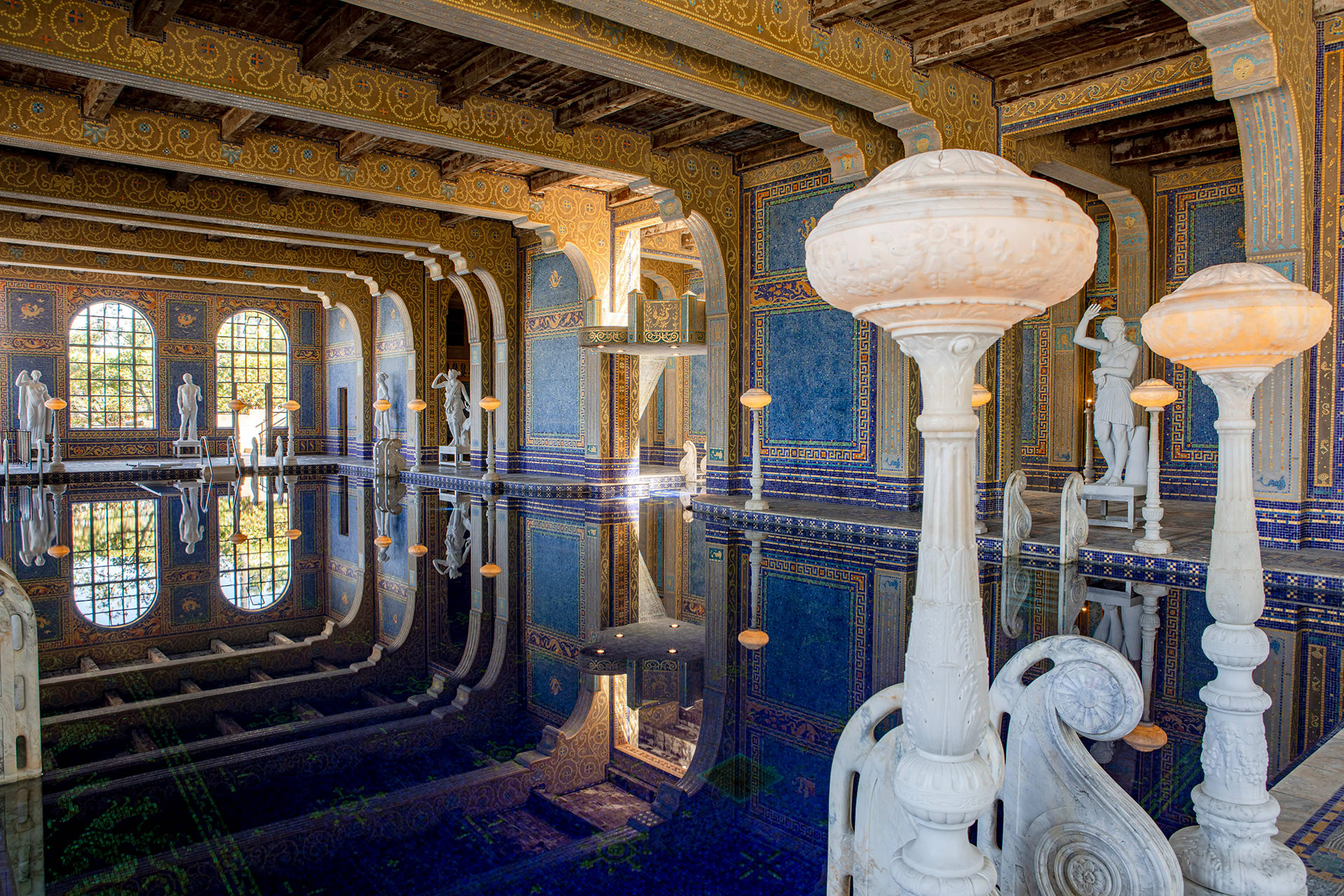
  Neptune Pool
 
About the Gardens
  Garden Preservation
  Plants of Spring
  Plants of Winter
  Plants of Fall
  Plants of Summer
  Photos Needed for Garden Restoration Project.
 
  Tour Guide Training
  State Park
Involvement
 
  Volunteer Programs
  Living History
Program