

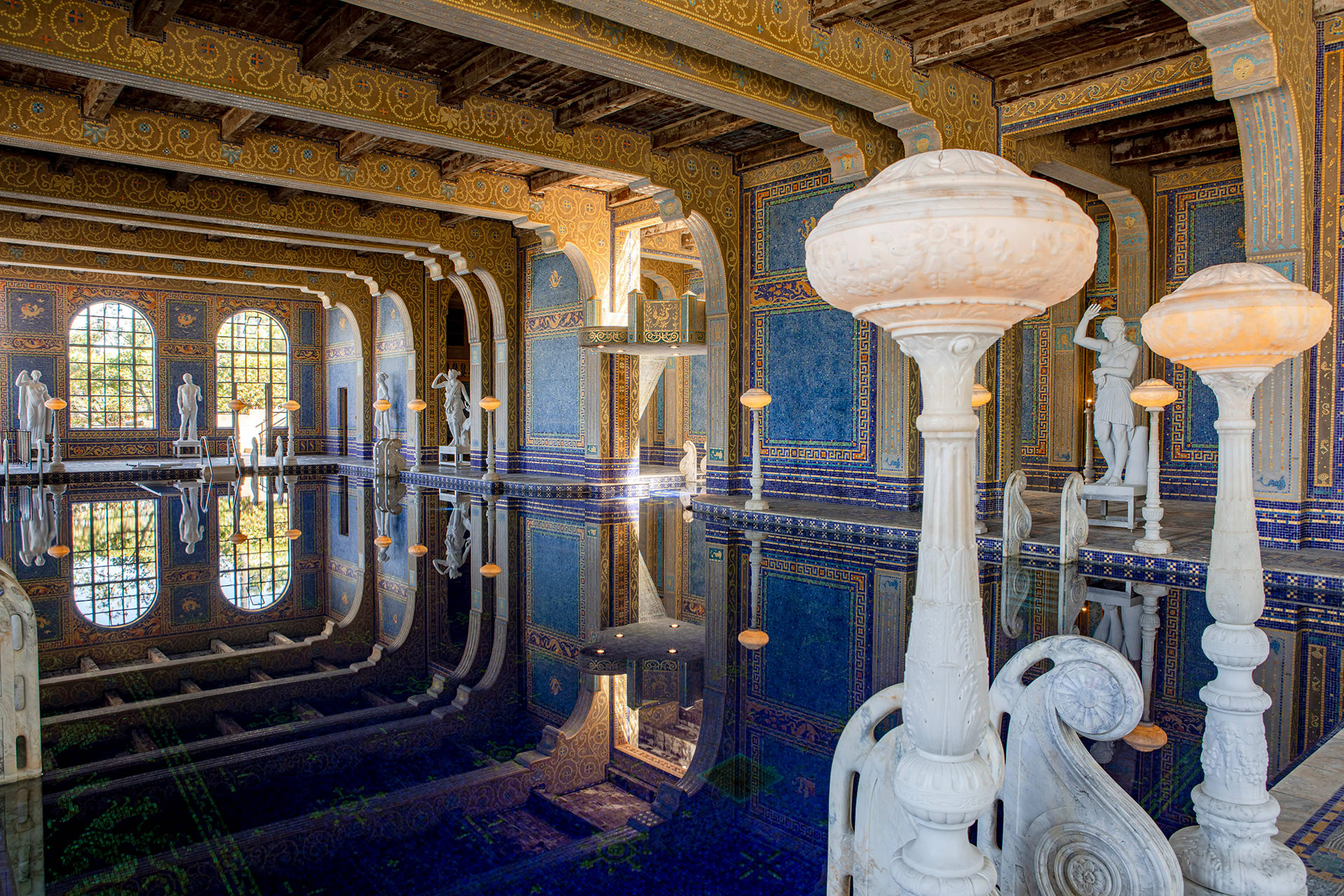
Known best as Hearst Castle – the estate comprises the magnificent 115-room main house, guesthouses, pools, and 8 acres of cultivated gardens. The main house itself, “La Casa Grande,” is home to Hearst’s extraordinary art collection and has hosted many influential guests, including President Calvin Coolidge, Winston Churchill, George Bernard Shaw, Charlie Chaplin, and a diverse array of luminaries from show business and publishing industries.
Explore the last 100 years of restorations and upgrades from the access road that carries over 850,000 visitors per year to its grand architecture, art collections, and lush gardens, all restored to their historic beauty. Your visit supports sustainable efforts to maintain this iconic estate for future generations. Experience the timeless elegance of Hearst Castle today!